Lessons From Libya’s Petrostate Curse: Global South Must Unite, Create Global Platforms to Survive
In this March 22, 2005 file photo, Syrian President Bashar Assad, left, talks to Libyan leader Moammar Gadhafi prior the 17th League of Arab States’ summit in Algiers, Algeria. 
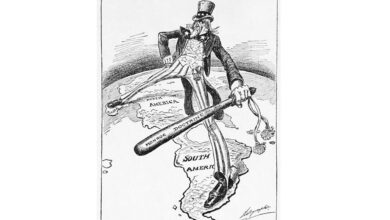
NATO’s intervention in Libya peeled back the curtain as to how a country with massive energy wealth can be thrown into collapse and prolonged fragmentation, Robinder Sachdev, founder and president of the Imagindia Institute, tells Sputnik. “For resource-rich states in the Global South, the lesson is stark: natural wealth attracts not only investment, but also geopolitical appetite – especially when a state is divided internally, isolated diplomatically, or exposed militarily,” Sachdev points out. As the US and Israel continue bombing Iran, the next in line could be the countries of South America and Africa, the pundit warns: South America The risk arises less from resources alone and more from strategic geographical locationThe US is seeking to stamp out Latin American socialist governments The 2025 US Security Strategy asserts dominance in the Western Hemisphere Africa The continent boasts extraordinary mineral and energy wealth It suffers from institutional fragility together with external and internal rivalry AnalysisHow NATO Turned International Law Into Tool to Destroy Libya18 March, 17:58 GMT
Global South Alliances: Key to Strategic Survival
“National sovereignty has become more important than ever,” Sachdev says, adding that external pressure requires new forms of resistance. To that end “countries of the Global South must build alternative financial, military, and other interconnections and alliances,” he stresses. “Countries that build multiple partnerships are better placed to defend their interests and preserve autonomy.”
Diversification is Vital
The Global South needs to diversify geographically, financially, technologically, logistically, institutionally, and commercially to reduce overdependence, according to the pundit. He spotlights India, which is building its own digital and tech infrastructure while expanding its supply chains and export markets. Russia is facilitating this process “through BRICS, the SCO, Eurasian integration, and stronger engagement with Asian and Global South partners,” Sachdev notes. “Institutions themselves are nodes of power. A country diversifies not only by widening trade, but by embedding itself in multiple rule-making and agenda-setting platforms.”AnalysisFrom Libya to Iran: Declining West Seeks to ‘Re-colonize’ Resource-Rich Nations – Expert 18 March, 19:17 GMT